
The Most Common Kitchen Remodel Question We Hear
If you're considering a kitchen remodel in San Diego, the first question on your mind probably isn't about countertop materials or cabinet finishes. It's this: How long is this going to take?
It's a fair question. Your kitchen is the most-used room in your home, and living without it for weeks — or months — sounds stressful. The good news is that with proper planning and an experienced remodeling team, the process is more predictable than you might think.
At Fern Ridge Foundation, we walk every homeowner through a clear timeline before work begins. Here's a realistic look at what a typical mid-range kitchen remodel looks like, week by week, so you can plan your life around the renovation instead of the other way around.
Before the Clock Starts: The Pre-Construction Phase
Before any demolition happens, there's critical groundwork that determines whether your project stays on schedule. This phase usually takes 3 to 6 weeks and includes:
- Design and material selections: Finalizing your layout, choosing cabinets, countertops, fixtures, and appliances.
- Permits: Most kitchen remodels in San Diego require permits, especially if you're moving plumbing, electrical, or gas lines. The City of San Diego permitting process can take anywhere from a few days for simple projects to several weeks for more complex work.
- Ordering materials: Custom cabinets can take 4 to 8 weeks to arrive. Ordering early prevents delays once construction begins.
This pre-construction phase is where rushed decisions lead to costly change orders later. Taking the time here actually shortens the overall project.
Week 1: Demolition and Discovery
Demo day is exciting — and a little loud. During the first week, your remodeling crew will:
- Remove existing cabinets, countertops, flooring, and fixtures
- Strip the space down to the studs where necessary
- Inspect for hidden issues like water damage, outdated wiring, or plumbing that doesn't meet current code
This is the phase where surprises happen. In older San Diego neighborhoods like Scripps Ranch and Poway, it's not uncommon to find galvanized pipes, aluminum wiring, or subfloor damage hidden behind decades-old cabinetry. A good contractor builds a small contingency into the schedule for exactly these situations.
Pro Tip: Set Up a Temporary Kitchen
Before demo begins, set up a small station in another room with a microwave, coffee maker, paper plates, and a cooler or mini fridge. It makes the weeks ahead much more manageable.
Weeks 2–3: Rough-In Work
This is the behind-the-walls phase that most homeowners never see but that determines how well everything functions for years to come. During these weeks, your team handles:
- Plumbing rough-in: Moving or adding water supply and drain lines for the new layout
- Electrical rough-in: Adding circuits, recessed lighting boxes, and dedicated lines for appliances
- HVAC adjustments: Rerouting ductwork if the layout has changed significantly
Each of these trades requires a separate inspection by the city before walls can be closed up. In San Diego, scheduling inspections promptly keeps the project moving. Experienced local contractors know how to coordinate these efficiently.
Weeks 3–4: Closing Walls and Installing Cabinets
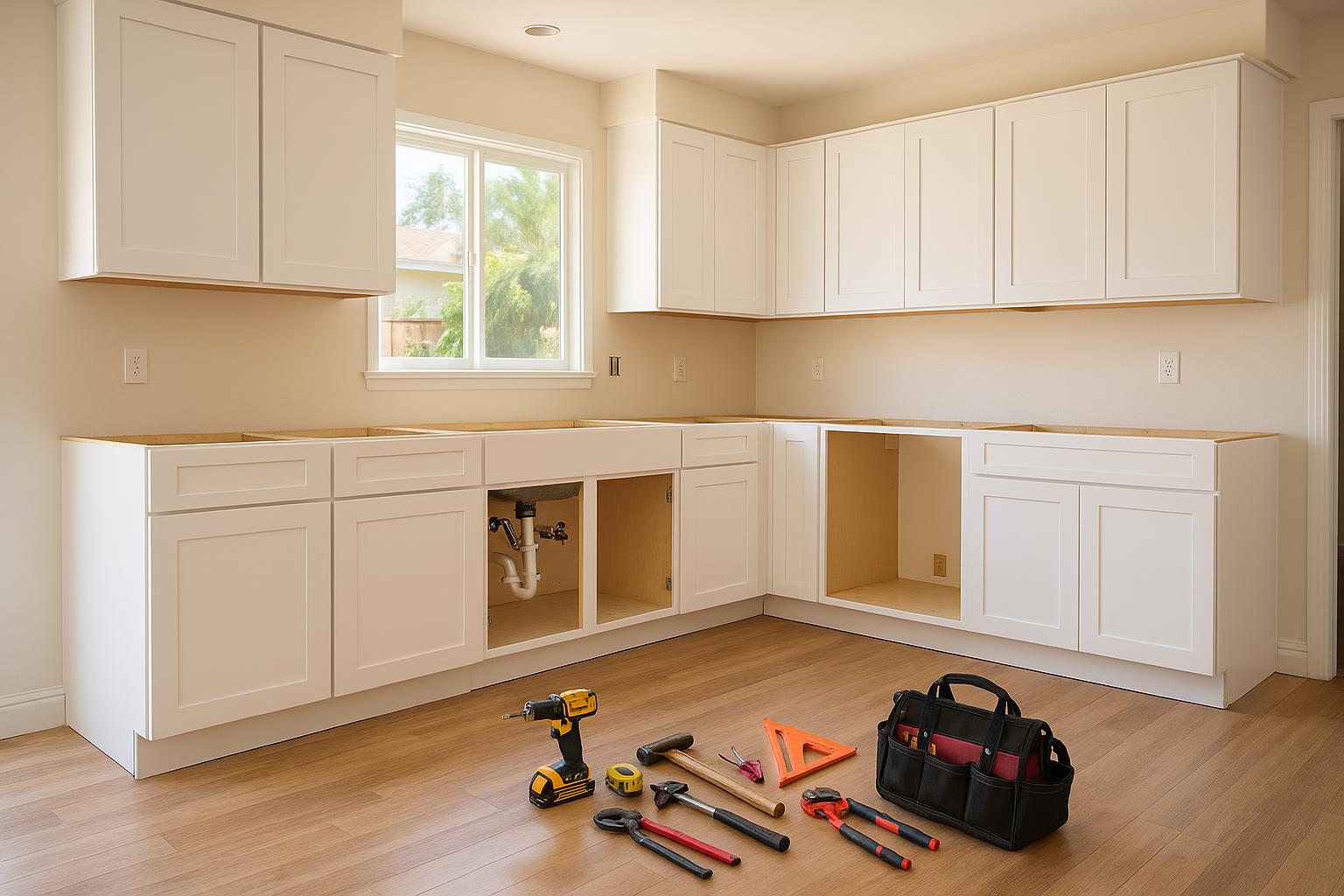
Once inspections pass, the transformation becomes visible. Drywall goes up, gets taped, mudded, and sanded. Then comes the moment most homeowners have been waiting for: cabinet installation.
This is when your kitchen starts to look like a kitchen again. Precise installation matters here — even a fraction of an inch off can affect how doors align and drawers close. After cabinets are set, your team will typically install:
- Cabinet hardware
- Filler pieces and trim
- Under-cabinet lighting
Weeks 5–6: Countertops, Backsplash, and Flooring
With cabinets in place, countertop fabricators come to do a final measurement — called a template — and then fabricate and install your surfaces. For popular materials like quartz or granite, expect about a week between templating and installation.
While waiting for countertops, other work continues in parallel:
- Flooring installation: Whether you've chosen luxury vinyl plank, tile, or hardwood, this typically takes 2 to 3 days for an average-sized kitchen.
- Backsplash tile: Installed after countertops are set, usually taking 1 to 2 days plus grouting and sealing time.
- Painting: Walls and ceilings get their final coats of paint.
Week 7: Fixtures, Appliances, and Final Details
The last week is all about bringing everything together:
- Sink and faucet installation
- Appliance delivery and hookup
- Light fixtures and switch plates
- Final trim and caulking
- Touch-up painting
Your contractor should also schedule a final walkthrough with you to create a punch list — a detailed checklist of any minor items that need attention before the project is officially complete.
So How Long Does a Kitchen Remodel Really Take?
For a typical mid-range kitchen remodel — new cabinets, countertops, flooring, lighting, and appliances with some layout changes — you're looking at 6 to 8 weeks of active construction after materials arrive and permits are secured.
More complex projects involving structural changes, room expansions, or high-end custom work can take 10 to 12 weeks. Smaller cosmetic refreshes with no layout changes might wrap up in 3 to 4 weeks.
Here's a quick summary:
- Cosmetic refresh (new surfaces, paint, fixtures): 3–4 weeks
- Mid-range remodel (new layout, cabinets, countertops): 6–8 weeks
- Major renovation (structural changes, additions): 10–12 weeks
What Causes Delays — And How to Avoid Them
The most common reasons kitchen remodels run over schedule include:
- Late material selections: Changing your mind on cabinets or tile mid-project can add weeks.
- Permit delays: Working with a contractor who understands San Diego's permitting process helps avoid bottlenecks.
- Backordered materials: Supply chain issues still affect certain products. Ordering early is essential.
- Scope creep: Deciding to add a pantry or relocate a wall once construction has started disrupts the schedule and budget.
The best way to stay on track is to make all major decisions before demo day and work with a remodeling team that communicates proactively when anything changes.
Ready to Start Planning Your Kitchen Remodel?
Whether you're in Rancho Bernardo, Mira Mesa, La Jolla, or anywhere across San Diego, understanding the timeline helps you plan with confidence. At Fern Ridge Foundation, we provide a detailed project schedule before construction begins — and we keep you updated every step of the way.
If you're thinking about remodeling your kitchen, reach out for a free consultation. We'll walk through your goals, discuss realistic timelines, and help you create a kitchen you'll love coming home to.